Protecting Learning in the Age of AI
Register
October 16, 2026 • 4 min read
What the new HSC assessment rules mean for all students
By Catherine Litchfield, Deputy Principal, Kinross Wolaroi School
Artificial intelligence will be part of our students’ future. Our task is to ensure it strengthens learning rather than replacing the reading, writing, knowledge and sustained effort on which genuine understanding depends.
Artificial intelligence is rapidly transforming the world around us. From the workplace to higher education, AI tools are becoming part of everyday life and will undoubtedly play a significant role in the future our students will inherit. The challenge for schools is not whether students will encounter AI, but how we ensure they develop the knowledge, skills and judgement to use it wisely.
New requirements for HSC assessment
The NSW Government and the NSW Education Standards Authority have announced significant changes to HSC assessment requirements in response to the rapid rise of generative AI. In most Preliminary and HSC courses, school-based assessment programs will be limited to no more than one take-home assessment task, with a maximum weighting of 15 per cent of the school-based assessment mark. For HSC courses, the change takes effect from Term 4, 2026, as the Class of 2027 begins its HSC studies. It will apply to Preliminary courses from Term 1, 2027.
Schools will retain flexibility to use assessment types appropriate to each course, including examinations, oral tasks, process diaries and supervised or teacher-monitored work. Courses with major projects or HSC practical examinations are exempt from the take-home limit, although schools must continue to authenticate student work.
The intent is clear: an HSC result must represent a student’s own knowledge, skills and thinking. The change is not simply about preventing inappropriate use of AI. It is about protecting the learning process itself and ensuring our students are not outsourcing their cognitive power.
Assessment that reveals authentic learning
The announcement has prompted an important discussion across the education sector. Traditional take-home tasks are no longer always the most reliable way to measure understanding when generative AI can produce sophisticated responses in seconds. Assessment must evolve so that teachers can see how students reason, communicate, solve problems and apply knowledge for themselves.
“AI is a powerful tool, but it cannot replace the learning that comes from grappling with ideas, making mistakes, refining your thinking and developing your own voice. Our responsibility as educators is to prepare students for a future that includes AI while preserving the intellectual habits that help young people become capable, independent, life-long learners.”
This does not mean rejecting technology. It means choosing the right tool for the right purpose and designing more opportunities for students to demonstrate understanding in real time. Supervised written responses, oral presentations and viva voces, discussions, practical applications and documented learning processes can strengthen academic integrity while also developing communication, creativity, critical thinking and problem-solving.
Rebuilding the habits of deep learning
The discussion about AI also asks us to revisit a broader question: what learning experiences best prepare young people for an increasingly complex world? Technology offers extraordinary opportunities, but strong literacy, numeracy and subject knowledge remain the foundations of academic achievement and lifelong learning.
At Kinross Wolaroi School, we want students to read more, write more using paper and pen, and engage more deeply with sustained, high-quality texts. We also see an important place for well-chosen textbooks. A textbook can provide a coherent body of knowledge, sequence ideas carefully and give students a dependable reference point from which to question, compare and extend their understanding.
“Critical thinking does not exist in a vacuum. Students need a body of knowledge to think with. The more they read, write and engage with quality texts and carefully sequenced subject material, the better equipped they are to question assumptions, evaluate evidence, discern data and form their own conclusions.”
Digital resources remain valuable, but speed and convenience are not the same as depth. Reading a substantial text, constructing an extended argument, taking notes, revising a draft and persisting with a difficult problem all build habits that cannot be outsourced. These are the habits we want to strengthen across the curriculum.
“We want our students reading books, using textbooks with purpose, writing often and thinking hard. Knowledge matters. The ability to think critically depends on having something substantial to think about.”
What the latest PISA results tell us
The OECD’s PISA 2025 results, released on 8 September 2026, provide a sobering international context. Across OECD countries, average performance in reading and mathematics fell to the lowest levels recorded by PISA. Between 2015 and 2025, average reading performance declined by 28 points and mathematics by 22 points. The OECD has urged education systems to reverse these declines and has emphasised that technology and AI can support learning only when they are used purposefully, rather than as substitutes for attention, effort and understanding.
No single factor explains an international trend of this scale, and the results should not be used to claim that devices or social media alone caused the decline. They do, however, sharpen legitimate concerns about distraction, reduced sustained reading, changing study habits and the influence of algorithm-driven environments on young people’s attention. They reinforce the need for schools and families to protect time for reading, conversation, concentrated study, sleep, exercise and face-to-face relationships.
A message for parents
For families navigating this changing environment, my advice is to delay personal devices and social media access for as long as reasonably possible. If your family circumstances allow it, there is real value in holding back throughout high school, even to Year 12. This is a deliberately strong recommendation, and every family will need to make decisions suited to its own circumstances, but at present I believe the benefits of delaying access outweigh the disadvantages.
“Children do not need unrestricted access to every technology simply because it exists. Giving them more time to develop literacy, concentration, self-regulation, friendships and confidence before introducing highly persuasive devices and platforms is not holding them back. It is giving those foundations room to grow.”
This is not a call to remove useful technology from learning. It is a call to distinguish between intentional educational use and constant personal access. A school-managed device used for a defined learning purpose is different from an always-available phone shaped by notifications, social feeds and recommendation algorithms.
Schools cannot address this challenge alone. Parents and educators need to work together to create conditions in which young people can focus, remain curious and tolerate the productive struggle that deep learning requires. Some of the most powerful steps are also the simplest: encourage daily reading, make books visible and available, protect device-free time, limit notifications and keep phones away from bedrooms and study spaces where possible. The government has banned young students from social media for substantial reasons. As parents, we must support this decision, monitor and restrict our children’s use on banned social media platforms. Social media IS harmful for young brains. Many studies show negative neurological impacts and associated risks of depression, decreased attention spans, sleep deprivation and cyberbullying.
Innovation with purpose
One of the great strengths of a Kinross Wolaroi education is the emphasis we place on thinking deeply and engaging meaningfully with learning. We want students to understand emerging technologies, to use them ethically and effectively, and to recognise when not to use them.
“The future will belong to people who can think critically, communicate clearly, solve complex problems and exercise sound judgement. Those qualities remain fundamentally human, and they remain at the heart of a Kinross Wolaroi education.”
As the new assessment requirements take effect, we will review our Preliminary and HSC assessment programs and continue working closely with staff, students and families. Our aim is not merely to comply with a new rule. It is to ensure that assessment supports genuine learning, that technology serves a clear educational purpose, and that every student develops the knowledge, confidence and independence needed for life beyond school.
About the author
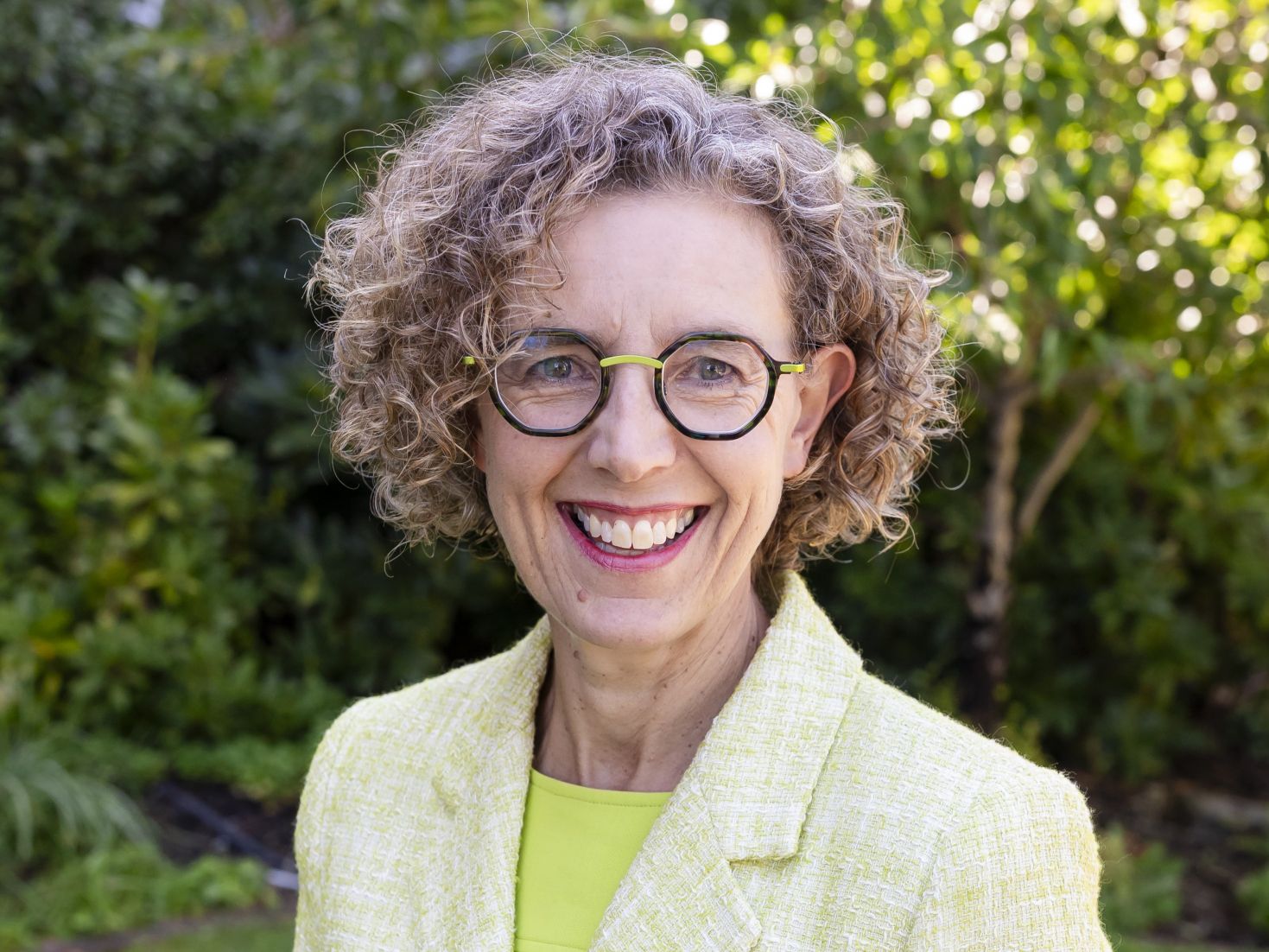
Catherine Litchfield is a highly respected educational leader, Deputy Principal, published author and experienced HSC marker. Her professional achievements span curriculum leadership, teacher development and the design of innovative learning programs that enhance student outcomes and foster a culture of academic excellence.
Sources and further reading
• NSW Government: New rules for schools on AI in take-home HSC assessments
• NSW Education Standards Authority: New limit on take-home assessment tasks from Term 4 2026
• OECD: PISA 2025 students’ reading and mathematics performance declined sharply across the OECD
.webp)